QQQ Stock Price Forecast 2026 to 2030: What analysts say on data?

New York, 26 January 2026: Invesco QQQ Trust, Series 1 (NASDAQ: QQQ) is a leading exchange-traded fund (ETF) that tracks the Nasdaq-100 Index. This fund mainly invests in companies in technology, consumer goods, and other emerging sectors. According to analysts in the US stock market, the price of QQQ is likely to rise between 2026 and 2030, but market volatility, economic policies, and global events could cause changes.
In this article, we will have a detailed discussion about QQQ’s price forecast, predictions by American analysts, the fund’s pros and cons, the company’s plan, total returns for investors, and the impact of US government policies on it.
QQQ Stock Price Forecast 2026 to 2030
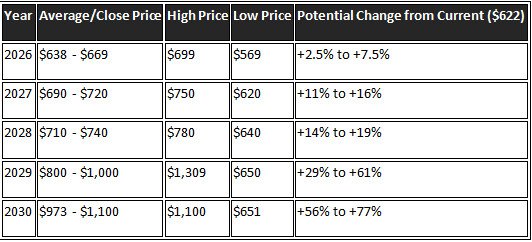
The current price of QQQ (as of 26 January 2026) is around $635. According to various financial websites and forecast models, the average price is expected to increase from 2026 to 2030. The table below shows the yearly average, high, and low forecasts:
Conservative Forecast Table : Lower-end estimates, from WalletInvestor, LongForecast early months)
Optimistic Forecast Table : Higher-end, e.g., CoinPriceForecast, TipRanks extended
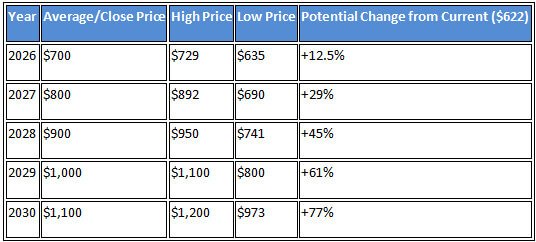
This forecast is based on AI-based algorithms and historical data. It is likely to reach an average of $727.65 by 2030, with growth in the tech sector (like AI, cloud computing) playing a key role.
American stock market analysts’ QQQ stock price predictions from 2026 to 2030
American analysts are positive but cautious. According to TipRanks, the average price target is $741.24, with a high of $892.96 and a low of $558.49. WalletInvestor expects long-term growth by 2031, rising from the current $622.72. Motley Fool and Nasdaq analysts say QQQ will outperform the S&P 500, especially by 2030, as it’s tech-focused. Institutions like Bank of America are positive for 2026 but warn of risks due to global trade wars and rising interest rates. Overall, analysts expect a 19.41% increase but advise caution because of a possible bear market.
Pros and cons of Invesco QQQ Trust, Series 1
QQQ is attractive for investors, but there are risks too. Here are the pros and cons:
Pros
- High growth potential: QQQ has given 545.61% more return than the S&P 500. Tech companies like Apple, Microsoft, and Amazon give an annual return of 18.6%.
- Diversity: Investment in 100 companies, including new sectors.
- Low cost: Expense ratio 0.18% (after recent changes), which is competitive.
- Liquidity: $407 billion in assets, making buying and selling easy.
Cons
- High volatility: big losses in a market downturn, like the risks in a bear market.
- Sector concentration: mainly technology (60%+), which increases sector-specific risks (like the AI bubble popping).
- High valuation: prices are high, making improvement possible.
- Small-cap shortage: Only big companies, so no benefit from the growth of small companies
- Concentration risk: Top 10 companies hold over 50% share, like Amazon alone at 22%.
Invesco QQQ Trust, Series 1 plan
The main plan of QQQ is to track the Nasdaq-100 index, which includes the 100 largest non-financial companies listed on Nasdaq. This fund provides diversification across new sectors (technology, consumer, healthcare), and investors don’t have to pick stocks. In 2025, Invesco converted QQQ into an open-end fund, which reduced the expense ratio (from 0.20% to 0.18%) and increased transparency. The aim is to give investors access to AI, cloud, and digital innovations, including large-cap growth, core equity, or thematic investing. The fund encourages dollar-cost averaging to seek the market’s average price.
Total return given to investors
QQQ has given investors strong returns. Since its inception in 1999, the total return is +1,341.95%, with an average annual return of 10.44%. In the past 5 years, the total is +101.70% (2020 to 2025). Over 10 years, it’s +546.13%. Annual return history (2023 to 2025):
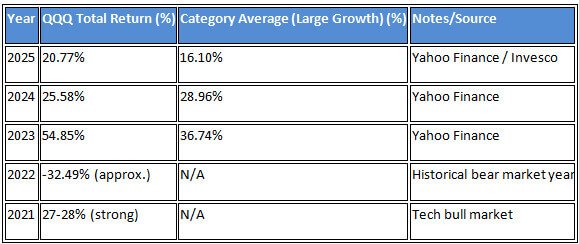
17.51% over the past 12 months and 1.37% YTD. The 30-year compound annual return is 14.02%. These returns include dividend reinvestments.
Impact of American government policies on QQQ
US government policies have a direct impact on QQQ because this fund is technology-focused. An increase in the federal fund rate reduces QQQ’s liquidity, which lowers prices. Policies from the Trump administration, like big tariffs and AI regulation, made QQQ drop by 2.15%. Global tariffs hurt tech companies, but QQQ’s digital tilt offers some protection. Trade policies and regulatory changes affect the ETF portfolio, like tax hikes or taxes on tobacco products affecting some of QQQ’s companies. On the positive side, AI and tech incentive policies benefit QQQ.
Overall, QQQ is good for long-term investors, but understand the risks and keep things diversified.
Related Articles