Texas Governor Greg Abbott halts H-1B visas at Texas universities

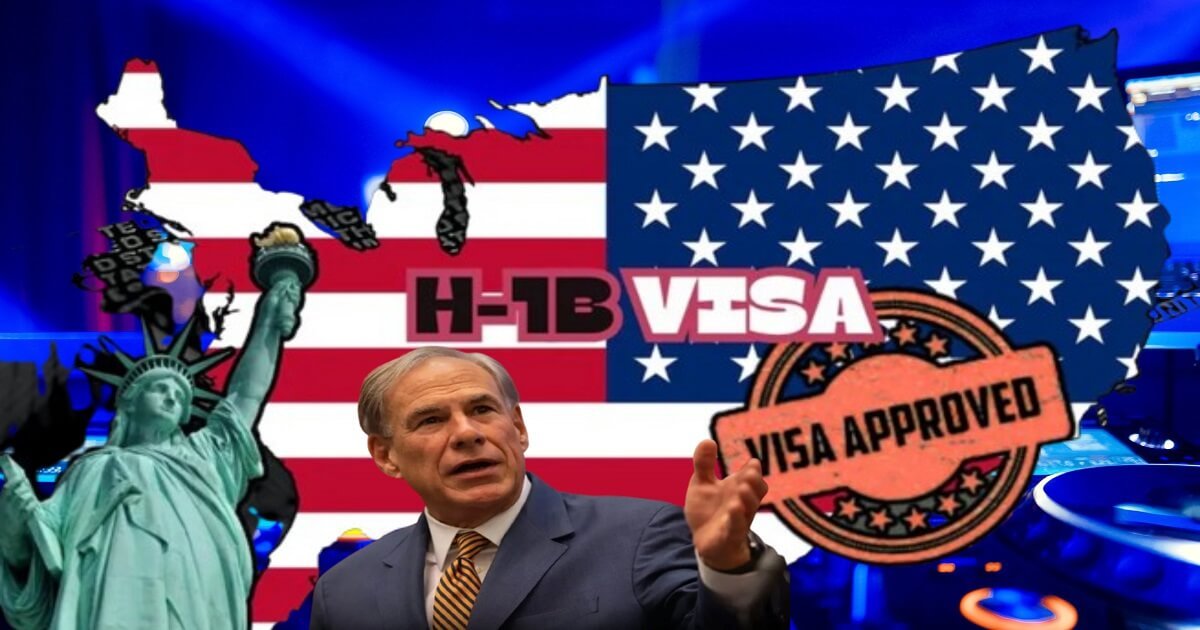
Austin, Texas, 29 January 2026: Texas Governor Greg Abbott has immediately blocked new H-1B visa applications in state government agencies and public higher education institutions. This ban will remain in effect until 31 May 2027, which could have a significant impact on the state’s research and education sector.
Background and reasons
The H-1B visa is a temporary visa that allows companies and organizations in the US to employ skilled foreign workers. The program was created to complement American workers. Still, according to Governor Abbott, it is being misused, with foreign workers being hired at lower wages in place of American workers. He has taken this step, citing reports of misuse in the program.
Governor Abbott wrote in a letter to the heads of state agencies, ‘Texas’ economy should work for Texas workers and employers. Against the backdrop of recent reports of abuse in the federal H-1B visa program and during the federal government’s ongoing review to ensure American jobs go to American workers, I am directing all state agencies to immediately halt new H-1B visa applications.’ He further said, ‘The state government should set an example and make sure that, especially, taxpayer-funded job opportunities go to Texans first.’
According to these instructions, all state institutions and public higher education institutions led by a governor must get written approval from the Texas Workforce Commission to file new H-1B petitions. This ban doesn’t apply to private sector companies like big employers such as Tesla or Oracle, which hire a large number of H-1B holders.
Review and report
Apart from the ban, Abbott has instructed a review of the current H-1B visa program. All affected organizations and universities will have to submit a report by 27 March, including the number of new and renewed petitions filed in 2025, the number of current sponsored workers, information about their home countries, and whether Texas residents were given a chance to apply for those positions.
The governor has emphasized investing in Texas’s own workforce, education and training so that there is no need to rely on ‘bad’ federal programs.
Feedback and worries
Mixed reactions have emerged on this decision. Some have welcomed it as a step to priorities American workers. For example, a user on X (formerly Twitter) wrote, ‘Texas First: Governor Abbott is shutting down the H-1B visa pipeline! American jobs for American workers.’
Texans come first.
I’m directing state agencies and universities to freeze new H-1B visa petitions. Texas taxpayers invest billions to train our workforce. Those jobs should go to Texans.
Texas is the strongest economic engine in America. We’re going to keep it that way.…
— Greg Abbott (@GregAbbott_TX) January 27, 2026
However, others have criticized this decision, especially in the higher education and research sector. Brian Evans, president of the Texas American Association of University Professors (AAUP-AFT), said, “Governor Abbott’s H-1B decision threatens innovation, economic growth and student experience at Texas public universities.” He added that this decision will harm global competitiveness in science, technology, engineering and medical fields.
FOX 4 News noted that this ban could threaten medical research and PhD programs that rely on the H-1B program to attract talented individuals. Institutions like UT Southwestern Medical Centre, which have a large number of H-1B visa holders, are likely to be affected by this decision.
Some X users have demanded sending current H-1B holders home, while others have criticized Governor Abbott for making such decisions only during the election.
Wide impact
Texas, known as the strongest economic engine in the US, could see its research institutions’ competitiveness affected by this decision. Florida Governor Ron DeSantis is also trying to limit H-1B visas in state universities.
This move aligns with President Donald Trump’s H-1B programe reforms, which include a new $100,000 fee so that only the ‘best and brightest’ get entry.
It remains to be seen what the future consequences of this decision will be, but it could give a new direction to debates on immigration and employment policies in the US.
Related Articles