ETF Vs Mutual Fund – What is best for investment?


New York, 20 February 2026: In the investment world, ETFs (Exchange-Traded Funds) and mutual funds are two popular options. Especially in the USA, both are key tools for investors. By 2026, millions of American investors will be investing in both. But which one is better? It depends on your goals, risk tolerance, tax plans and investment style. In this article, we will compare both in detail, discuss the pros and cons and suggest the best option in the USA.
What is an ETF?
ETF stands for Exchange-Traded Fund. It’s a type of investment fund that can be bought and sold like shares throughout the day (during trading hours) on a stock exchange (like NYSE or Nasdaq).
Most ETFs are passive – they mimic an index, e.g., S&P 500, Nasdaq-100.
- Example: An ETF could have shares of 500 companies.
- Expense: very low (average 0.14%).
- Advantages: high liquidity, lower tax burden, start with a very small amount for one share.
ETFs became popular in the USA after 2000 because they are as easy as stocks.
What is mutual fund?
Mutual funds are funds where money from many investors is pooled together and invested in shares, bonds, commodities, etc. by professional fund managers.
Buying and selling is done at the NAV (Net Asset Value) at the end of the day.
- Type: active (trying to outperform the market) or passive (tracking the index).
- Expense: on average 0.40% or more (management fee, 12b-1 fee etc.).
In the USA, companies like Vanguard and Fidelity manage mutual funds worth millions of billions of dollars.
Mutual fund Vs Index fund?
An index fund is just a type of mutual fund.
Index funds: They mimic a market index (like the S&P 500). Passive, low-cost (0.03-0.05%), they give market returns.
Typical mutual funds: mostly active. Fund managers pick stocks and try to beat the market, but it comes with higher costs and risk.
Important fact: In the last 15 years, 80-90% of active mutual funds haven’t been able to beat index funds/ETFs (SPIVA report). That’s why most experts recommend index funds or ETFs.
The main difference between ETFs and mutual funds
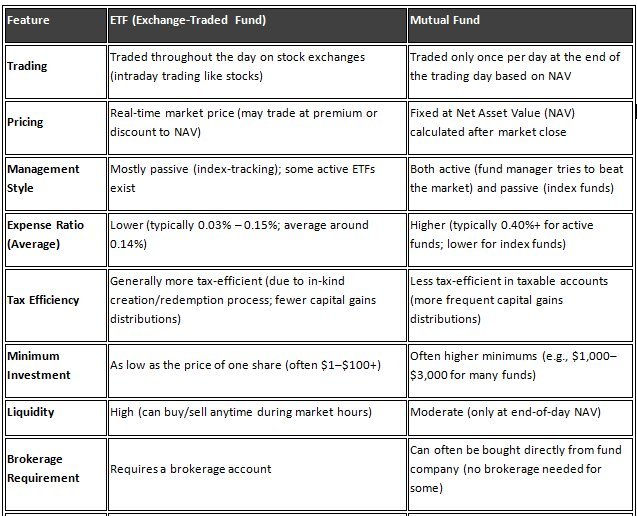
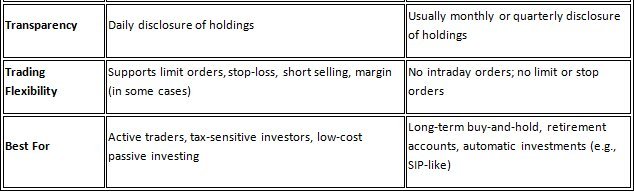
Tax benefits: ETFs are better in a taxable account in the USA because the creation/redemption process reduces capital gains distribution.
Pros and cons of ETFs
Pros
- Low cost : high return
- High liquidity, stop-loss orders can be placed
- Diversity is easy
- Tax-efficient
Cons
- Brokerage account needed
- Premium/Discount can be higher/lower than NAV (rarely)
- Temptation for active trading
Pros and cons of mutual funds
Pros
- Professional management (for active funds)
- Features like automatic SIP are easy
- I don’t want a brokerage account (with some companies)
- Great for retirement accounts (IRA, 401k)
Cons
- More expensive
- Low liquidity
- Higher tax burden (in taxable account)
- Active funds mostly don’t beat the index
Which is the best ETF for investment in the USA? (Recommendation for 2026)
These are popular and excellent ETFs for long-term investment (5+ years):
- Vanguard S&P 500 ETF (VOO) – Expense ratio 0.03%, tracks S&P 500. Steady growth, low risk.
- Invesco QQQ Trust (QQQ) – Nasdaq-100 (tech companies), high growth potential.
- Vanguard Total Stock Market ETF (VTI) – entire US market, maximum diversity.
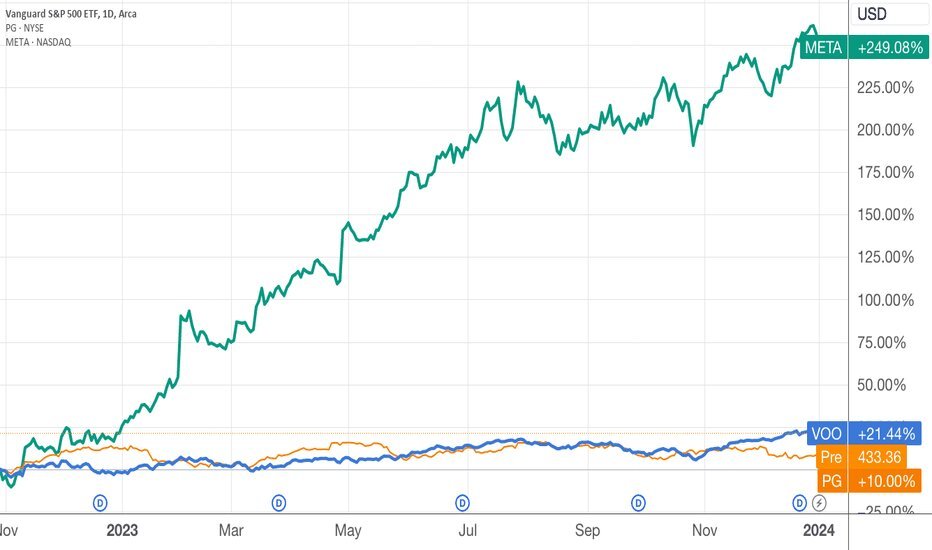
(The chart above shows VOO’s long-term performance – steady growth.)
Which is the best Mutual Fund for investment in USA?
- Fidelity 500 Index Fund (FXAIX) : Expense ratio just 0.015%, tracks the S&P 500 in index style.
- Vanguard 500 Index Fund (VFIAX) : Expense ratio 0.04%.
- For an active fund: Fidelity Blue Chip Growth (FBGRX) – focusing on top companies.
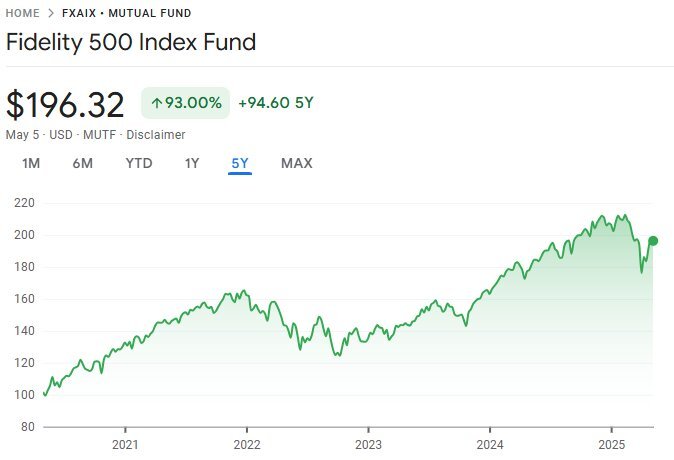
(Chart of FXAIX’s 5-year performance above – strong returns.)
Note: Index mutual funds are just as good as ETFs, only the trading style is different.
Which is the best for investing?
- Long-term, low-cost, set-and-forget: ETFs (VOO, VTI) or index mutual funds. Best for 90% of investors.
- Active trading, intraday: ETF
- Retirement account (IRA/401k): Both are good, but mutual funds are easier.
- Want tax efficiency: ETF (in a taxable brokerage account).
- Start with a small amount: ETF (one share).
General rule: Lower costs = higher returns. Only take active funds in specific sectors (sector funds).
Conclusion
ETFs and index mutual funds are best for most people in the USA because they are low-cost, tax-efficient and give market returns. Active mutual funds are only for experienced investors.
Talk to a financial advisor about your profile (age, goals, risk) and make a decision. Invest regularly like a SIP and stay long-term – compounding will grow your wealth!
Disclaimer: This information is for educational purposes. Investing is risky. Get advice. Based on 2026 data.
Related Articles