Gold Futures – Big drop in US silver & gold ETFs: US experts warn

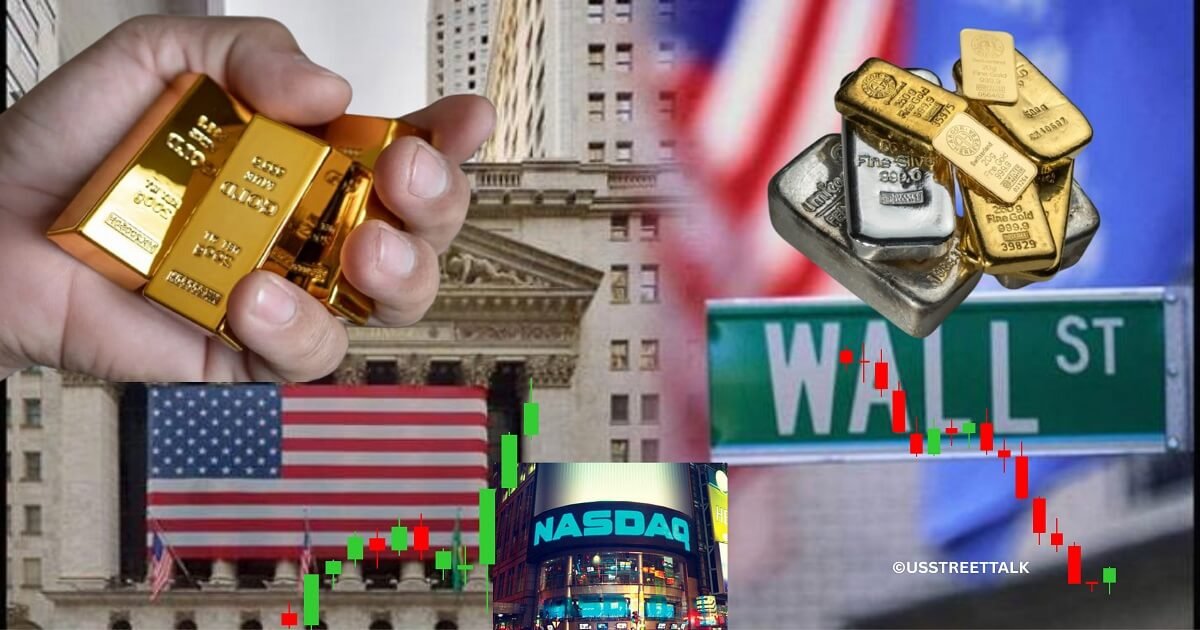
New York, 30 January 2026: In January 2026, there was a major upheaval in the US commodity market. Silver and gold exchange-traded funds (ETFs) saw a drop of 12% to 14%. This happened due to a wave of selling in the COMEX futures market. Silver prices fell from a record high of $121.64 to $109.55, while gold prices dropped from the high of $5,594.82 to $5,183.21. This slump is not limited to the US market alone, but its effects are being seen globally as well.
Wall Street experts like Marko Kolanovic and Peter Brandt have suggested that silver prices could crash by up to 50%. All these factors indicate economic uncertainty in 2026, including the strengthening of the US dollar, changes in Federal Reserve policy, and global geopolitical tensions.
Causes of landslide
Although this drop in silver and gold ETFs happened suddenly, there are many reasons behind it. First, at the start of 2025 and 2026, the prices of these metals reached record highs. Silver went up to $117.70 and gold to $5,150. After that, investors sold heavily to book profits. This also happened due to the strengthening of the US dollar, as a stronger dollar puts pressure on the prices of commodities like gold and silver.
The second reason is the potential changes in the Federal Reserve’s policy. US President Donald Trump has hinted at the possibility of appointing Kevin Warsh in place of Fed Chair Jerome Powell, who is a supporter of tighter monetary policy. This could lead to a rise in interest rates, which puts pressure on non-yielding assets like gold and silver.
Thirdly, global uncertainties such as geopolitical tensions (e.g., involving Russia, Iran, and China) and the possibility of a government shutdown in the US had pushed investors towards safe-haven assets, but now profits are being taken from that.
Besides, the difference between the paper market (futures and derivatives) and the physical market is also contributing to this decline. According to discussions on X (formerly Twitter), short positions by banks like Bank of America and Citigroup (4.4 billion ounces) have created tension in the market. Prices have dropped due to the selling of paper contracts while demand for physical silver has increased.
Experts’ warnings
Top experts on Wall Street consider this drop the beginning of a major crash. Former JP Morgan chief strategist Marco Colanovic said a 50% fall in silver prices is ‘very likely’ as it comes down from its current highs. Peter Brandt and other experts have echoed the same view. They say the silver rally is overbought and unstable due to speculative trading.
RBC Capital Markets analysts have said that gold prices will stay in the $4,500 to $5,000 range in 2026, but they could drop further in risk-off situations. Fed Chair Jerome Powell has also mentioned the possibility of a stock market crash, with the S&P 500 forward P/E ratio above 22, making a drawdown likely. According to posts on X, a flash crash (4-7% drop in 30 minutes) indicates margin calls and leverage blow-ups.
Impact on the market
This slide is directly affecting Wall Street in the US. Indexes like the S&P 500 and Nasdaq are also showing volatility, with an intraday drop of 1.5% recorded. ETFs like the iShares Silver Trust (SLV) and Gold ETFs fell by 8-17%. In India too, MCX silver futures dropped from a high of Rs 4,20,048 to Rs 3,34,503.
Globally, industrial demand (AI chips, solar, EV) for silver is strong, but recycling supply is dropping. This is causing backwardation in the physical market (spot price > futures price), indicating delivery issues. Investors are now following the ‘sell America’ trend, and retail investors are turning to gold and silver, but are booking profits due to fear of a crash.
Future outlook
According to experts, this dip is just a correction, but the possibility of a major crash can’t be ruled out. Silver prices might come down to the $80-90 support level, while gold’s could hit $4,750 and $4,500. Even so, due to global uncertainty and the commodity supercycle, the long-term trend is bullish. Silver could rise over 50% by 2026, but volatility will remain.
Investors should be cautious. It’s good to hold physical metal, but be aware of the risks in the paper market. According to the 80/50 rule, silver has become more expensive than gold, and there’s a sell signal.
Conclusion
The drop in silver and gold ETFs in the US is the start of the economic challenges for 2026. According to Wall Street experts, investors need to manage risk. This situation is an example of the volatility in the commodity market, where both profits and losses can happen quickly. Depending on future policies and global events, this market will either stabilise or dive even deeper.
Related Articles