No Tax On Overtime Explained; One Big Beautiful Bill explained

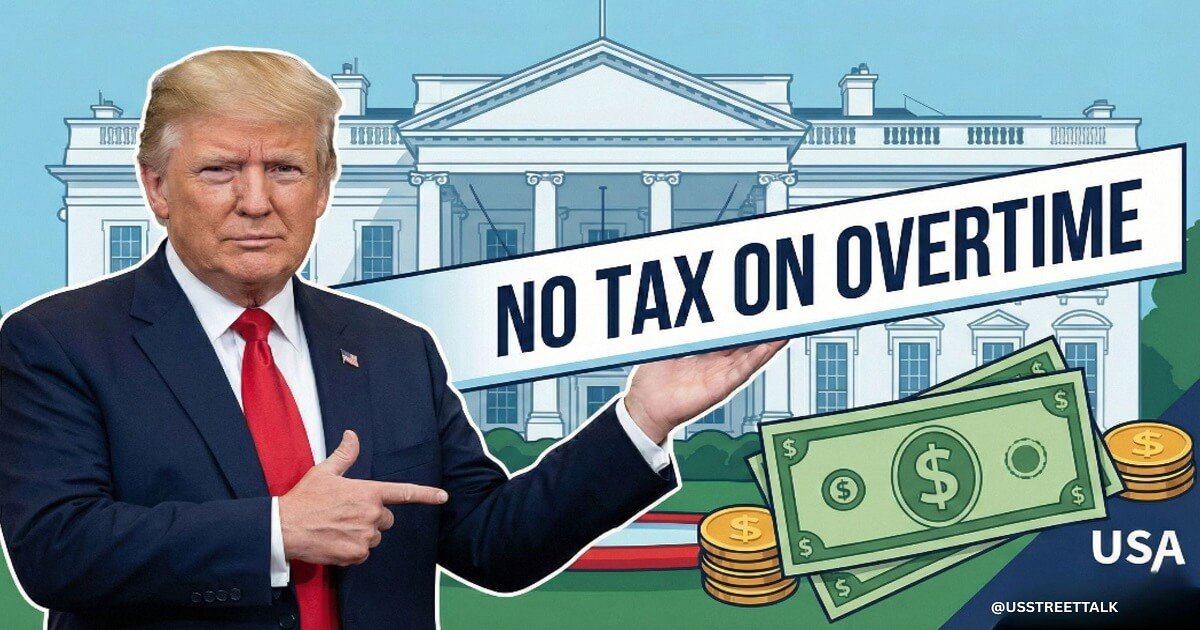
New York, 13 December 2025: There has been a revolutionary change in the US tax system. In July 2025, President Donald Trump signed a bill called the ‘One Big Beautiful Bill Act’ (OBBBA). This bill became law on 4 July 2025 and includes a key provision of ‘No Tax on Overtime’. This provision takes effect from the 2025 tax year and its benefits can be claimed for the first time while filing taxes in 2026. This initiative is seen as an important promise from Trump’s 2024 election campaign, aimed at directly benefiting the working class. This article will provide detailed information about this bill and especially about the tax exemption on overtime pay.
Background of the ‘One Big Beautiful Bill’
The Trump administration focused on expanding the 2017 Tax Cuts and Jobs Act (TCJA), and this new bill is basically its extended version. ‘One big beautiful bill’ is Trump’s signature phrase, part of the ‘Make America Great Again’ policy. The bill is designed to reduce the tax burden for American families and businesses. It includes around 4.5 trillion dollars in tax breaks, mostly for wealthy individuals and corporations, while regular workers get perks like ‘no tax on overtime’, ‘no tax on tips’, and ‘no tax on car loan interest’.
This bill was passed as H.R.1 in the 119th Congress and made the 2017 tax cuts permanent. This prevented over 4 trillion dollars in taxes. But critics say it includes 340 billion dollars in tax cuts for the rich, which is against the interests of ordinary citizens.
What is the tax exemption on overtime pay?
‘No tax on overtime’ provision (Section 70202) exempts a part of overtime pay from federal income tax. This tax-free benefit is not complete, but a deduction. That means your overtime pay can be deducted from your taxable income, which will reduce your tax burden.
How does this arrangement work?
- Effective date: From 2025 to 2028 (for 4 years). The claim can be made for the 2025 income for the first time during tax filing in 2026.
- Eligibility: This benefit is for eligible employees whose overtime pay is covered under the Federal Fair Labor Standards Act (FLSA). Regular employees, like production workers, healthcare staff, or service industry workers, can use it. It doesn’t apply to self-employed people or contract workers.
- Deduction limit: Additional work pay can be deducted up to $12,500 per year for a single person ($25,000 for joint filers). This only applies to the ‘premium part’ (the portion above normal pay). For example, if your regular hourly wage is $20, and you get $30 for overtime, only the $10 difference is deductible.
- Phase-out rule: If your modified adjusted gross income (MAGI) is more than $150,000 ($300,000 for joint filers), your deductions will gradually decrease and eventually disappear.
Explaining with an example
Suppose a worker earns an extra 15,000 dollars in a year. He is single and his MAGI is 100,000 dollars. He will get a deduction of 12,500 dollars, which will be subtracted from his taxable income. If his tax rate is 22%, he could save about 2,750 dollars.
What will tax be applied on?
This drawer is for federal income taxes, but it doesn’t apply to social security, Medicare, or state/local taxes.
Employees will have to show extra pay separately on the W-2 form. The IRS has given penalty relief for reporting in 2025.
Other important provisions in the bill
‘One Big Beautiful Bill’ isn’t just limited to extra work. There are lots of changes in it:
- No tax on tips: Tips for servers or service staff are tax-free.
- No tax on car loan interest: Deduction on car loan interest.
- Increased deduction for senior citizens: The standard deduction has been raised for individuals over 65 years old.
- Gift and estate tax increase: estate tax exemption raised to 15 million dollars.
- Top marginal rate cut: from 39.6% to 37%.
This bill also gives new tax credits for institutions that provide scholarships.
Economic and social impact
This provision will encourage workers, as doing extra work will now be more profitable. According to the IRS estimates, this will reduce federal revenue, but increase the income of the working class. However, critics say that this benefit is more advantageous for the wealthy and could harm the economy in the long run. For businesses, giving employees overtime will be easier, but reporting will become complicated.
A detailed explanation of the ‘No Tax on Tips’ provision in America
The ‘One Big Beautiful Bill Act’ (OBBBA), which brought significant changes to the US tax system, includes a key provision of ‘no tax on tips.’ President Donald Trump signed this bill into law on 4 July 2025. This provision was a major promise in Trump’s 2024 election campaign, directly benefiting service sector workers like restaurant servers and bartenders. It applies to tax years 2025 to 2028, so when filing taxes in 2026 for 2025 income, people can take advantage of it. This article will provide detailed information about this provision.
What is ‘no tax on tips’?
‘No tax on tips’ means not paying federal income tax on tips (gratuity). But, it’s not completely tax-free, it’s an above-the-line deduction. That means the amount of eligible tips can be deducted from your taxable income, which reduces your overall tax.
- Maximum contribution limit: $25,000 per year (for single filers). The same limit applies for joint filers too (according to some sources, there is no special increase for joint filings).
- Applicable period: Tax years 2025 to 2028 (provisional provision).
Qualified Tips:
- Tips given voluntarily by customers.
- Mandatory service charges (mandatory gratuity, like an 18-20% automatic charge for large groups) are not applicable.
- Both cash and non-cash (via credit card) tips are eligible.
- Tips received through tip sharing are also eligible.
This deduction is available to those itemizing as well as those taking the standard deduction.
Who gets the eligibility?
Eligible Occupations: The IRS has published a list of about 70 occupations until October 2025, which includes jobs that used to regularly receive tips before 31 December 2024. For example:
- Restaurant server, bartender, bellhop, valet.
- Beauty services (hair stylist, nail technician).
- Rideshare drivers (Uber, Lyft), influencers, performers, dancers (but not for pornographic activity or prostitution).
- Digital content creators who get tips
Income limit and phase-out:
If the Modified Adjusted Gross Income (MAGI) is more than $150,000 (single) or $300,000 (joint), the deduction gradually decreases (at a rate of 10%).
Example: For singles, the deduction is zero on a MAGI of 400,000.
Other terms:
- Social security number is required.
- Tips should be reported on W-2, 1099, or form 4137.
What will tax be applied on?
- Federal income tax: It goes down (or to zero) after deductions.
- Payroll taxes: Social Security and Medicare taxes will still apply.
- State and local taxes: Most states follow federal rules, but some Democratic states like New York and Illinois are refusing to give this break, so workers there won’t benefit.
Explaining with an example
Suppose a restaurant server earned $20,000 in tips over a year. Their MAGI is $80,000 and their tax bracket is 22%.
- He can manage the full 20,000 dollars in the pot.
- Tax saving: 20,000 × 22% = 4,400 dollars.
If the tips are $30,000, you’ll only get $25,000 after cuts.
Reporting and IRS guidance
- For the 2025 tax year, W-2 and 1099 forms haven’t changed, so employers don’t need to show tips separately (no penalties).
- Workers will have to keep the tips for themselves and claim them when filing in 2026.
- The IRS issued guidance in November 2025, suggesting alternative ways to calculate tips.
- From 2026, there could be changes in withholding, which could actually be beneficial for your salary.
Impact and criticism
This provision will benefit millions of workers in the service sector, especially those with low incomes. The average tax saving could be around $1,800. However, critics say:
- People with low income (earning less than the standard deduction) cannot benefit from this because they are not paying tax anyway.
- This could boost the tipping culture or make employers rely on tips.
- Federal revenue will decrease over the long term (estimated 32 billion dollars).
Conclusion
‘The One Big Beautiful Bill’ is a big relief for American workers, especially because of the tax-free pay on extra work. When filing taxes in 2026, follow the IRS guidelines to take advantage of it. Even though this scheme is temporary, it’s an important step for workers’ welfare. For more info, visit IRS.gov.
‘No tax on tips’ is a worker benefit that has been effective from 2025 income onwards. If eligible, claim it when filing your 2026 tax return. For more info, visit IRS.gov or consult a tax professional. Even though it’s a temporary provision, it’s a big relief for workers in the service sector.
(Reference: Based on IRS official announcements and Tax Foundation reports.)
Related Articles